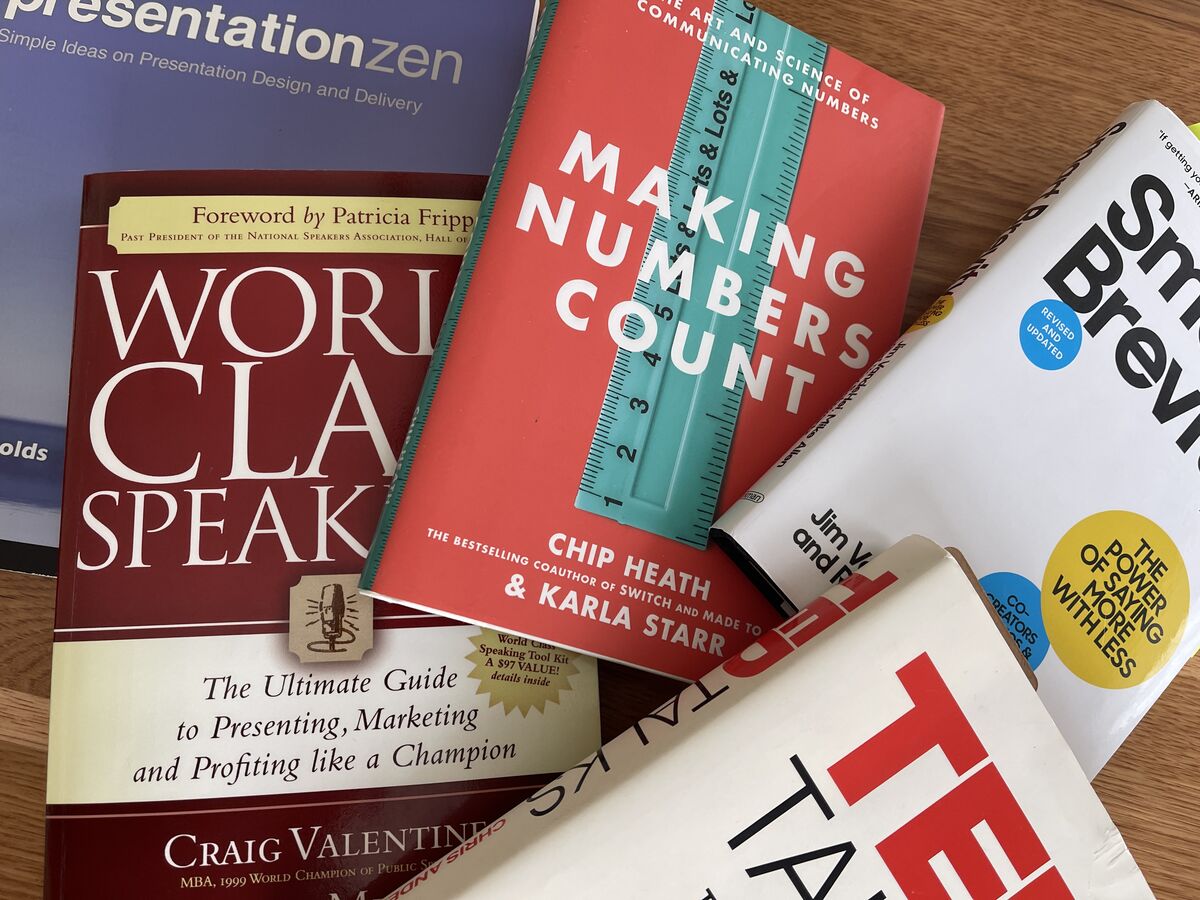
Ever since I joined Toastmasters, I’ve read a LOT of books about public speaking. These are the five I keep coming back to. They’ve helped me become a MUCH better speaker. They’ll help you, too.
5. “Presentation Zen” by Garr Reynolds
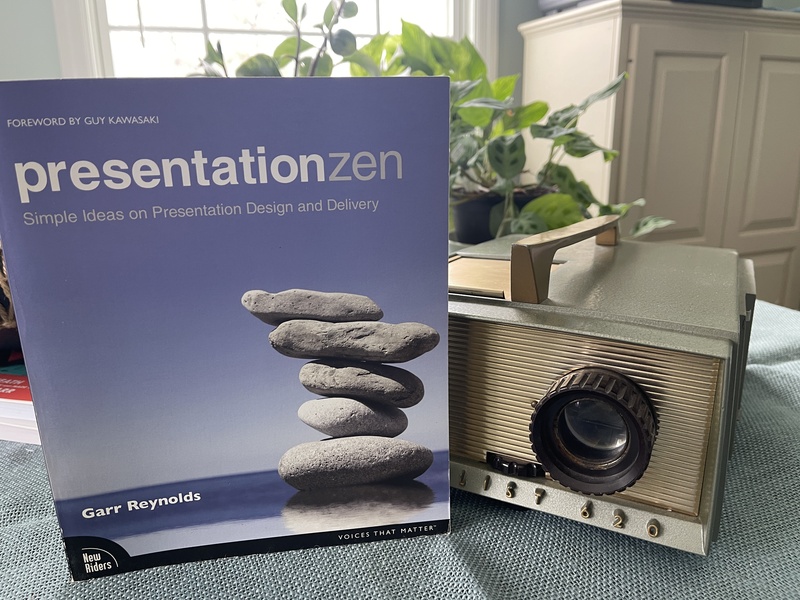
One big idea: Fill your whole slide with a single visual — image, chart, or photo.
Bonus idea: Only one idea per slide, with no text or just a few words.
Why it matters: Your audience didn’t come to read, they came to hear you speak. Let visuals support your story, not compete with it.
4. “Making Numbers Count” by Chip Heath & Karla Starr
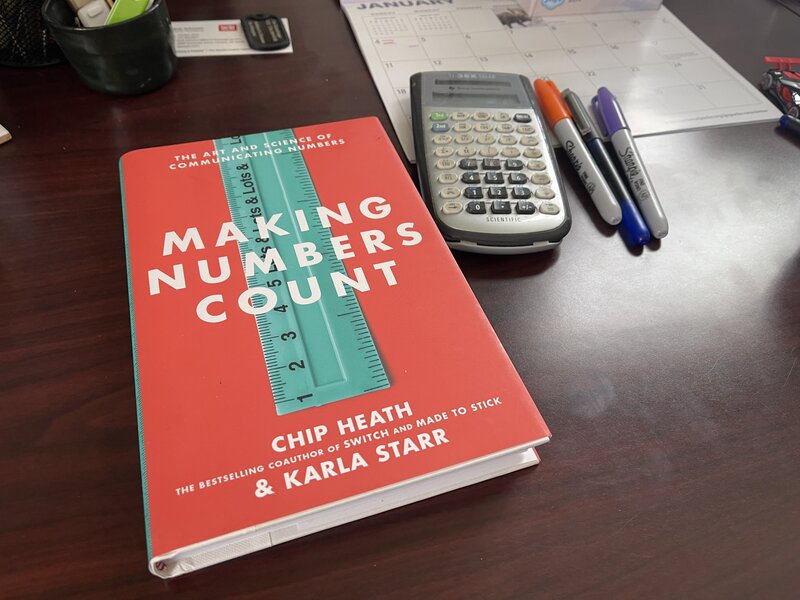
One big idea: Translate your numbers to make them relatable. For example: A million seconds is twelve days. A billion seconds is 32 years.
Bonus idea: Great translations don’t need numbers. Compare this number-dense, forgettable factoid
97.5% of earth’s water is salinated, 2.5% is fresh. Of that 2.5%, over 99% exists in glaciers and snowfields. That means only 0.025% is available for drinking.
with this mental image your audience will remember
Imagine a gallon jug to contain the earth’s oceans. Add three ice cubes to be all the fresh water. See a few drops melting off the cubes — that’s what we get to drink.
Why it matters: We humans aren’t really built to understand numbers. But they’re coming at us every day, and we need to communicate them. You can stand out by turning numbers into ideas we do understand.
3. “Smart Brevity” by Jim VandeHei, Mike Allen and Roy Schwartz
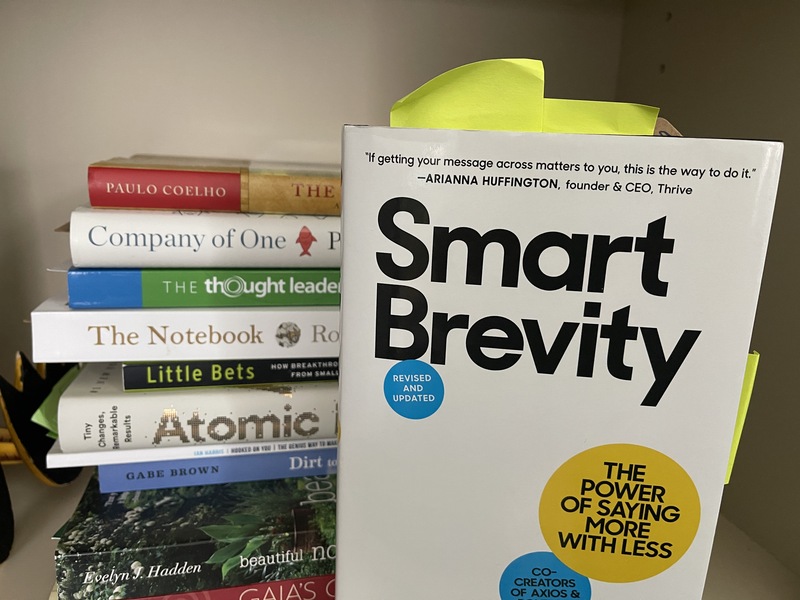
One big idea: Focus on ONE person you’re targeting and tell them the ONE thing you want them to remember. Then stop.
Bonus ideas: Tell your audience “why it matters” and give them the choice to “go deeper”, by providing a handout. Pro tip: Hand it out after you’re done speaking. If you give it earlier, they’ll read while you talk.
Why it matters: Your audience is short on time and even shorter on attention. Why take 30 minutes to say what you can in 3?
2. “TED Talks: The Official TED Guide to Public Speaking” by Chris Anderson
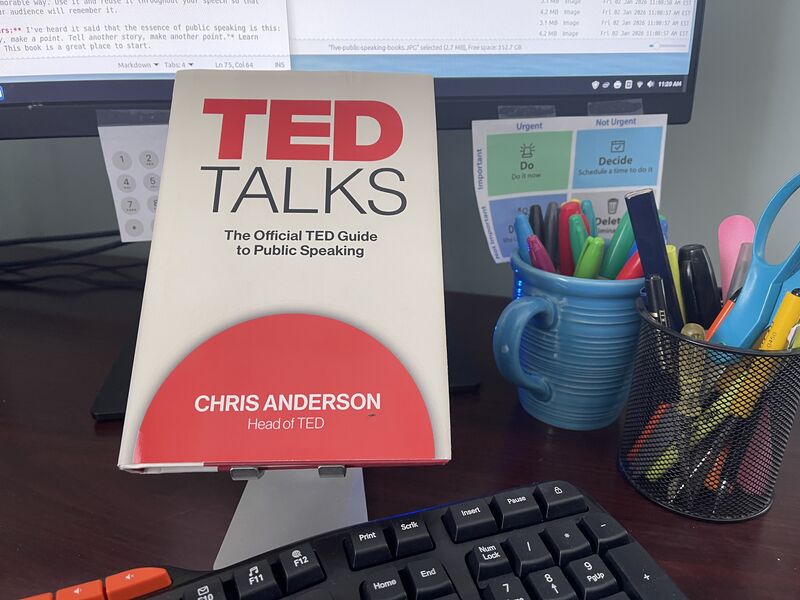
One big idea: To memorize or not to memorize? The majority of TED speakers script their entire talk and rehearse, rehearse, rehearse until it doesn’t sound scripted.
Bonus idea: If memorizing is not how you give your best talks, then don’t.
Why it matters: New speakers consistently ask me how to prepare. I tell them I’ve tried both. You should too. See which fits you best.
1. “World Class Speaking” by Craig Valentine and Mitch Meyerson
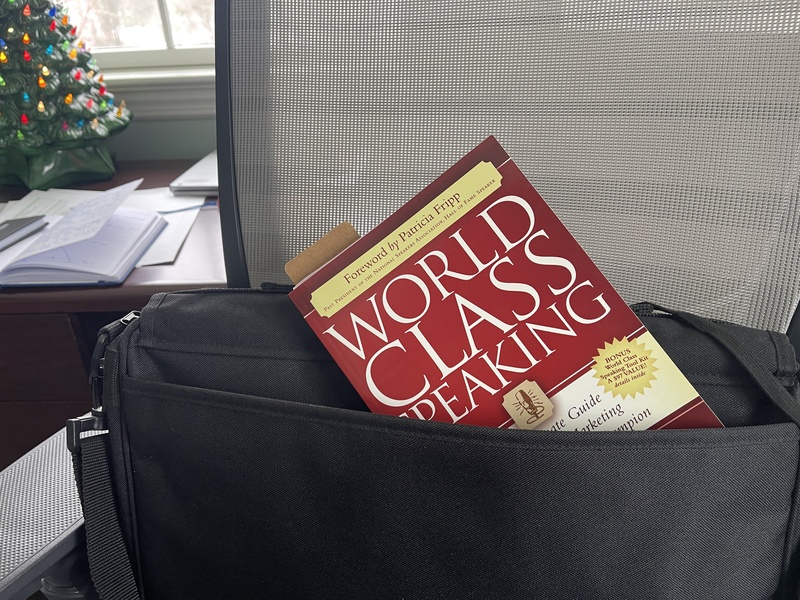
One big idea: Don’t just tell a story. Craig says, “Relive it and invite your audience into your re-living room.” Allow your listener to use their imagination, and engage their senses by describing the sights, sounds, smells, tastes, and textures of your story. The first time I told a story this way, my audience was absolutely mesmerized.
Bonus idea: Use a foundational phrase, less than 10 words, that condenses your message in a memorable way. Rhyming helps. So does rhythm. Use it and reuse it throughout your speech. Your audience will remember it.
Why it matters: I’ve heard it said that the essence of public speaking is this: “Tell a story, make a point. Tell another story, make another point.” Learn storytelling. This book is a great place to start.
Do NOT go out and buy all five of these books
Pick one and test drive it. The difference in your next presentation will be noticeable.
What’s on your top five list? Please send them my way — I need to keep reading and improving, too.